
Art Gallery of Ontario Expansion News Update: What Changed and What to Watch in 2026
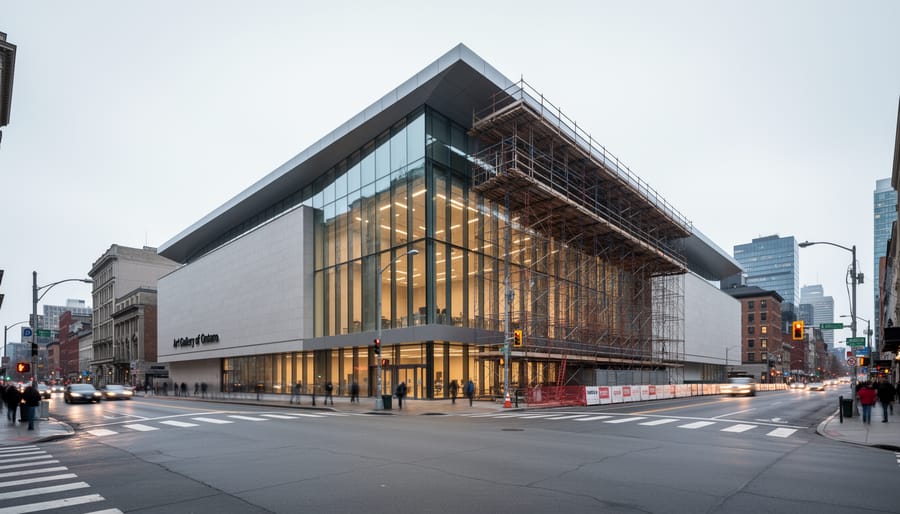
The Art Gallery of Ontario is undergoing its most ambitious physical transformation in nearly two decades, with a 40,000-square-foot expansion that will increase gallery space by 30 percent and reshape Toronto’s cultural landscape. Set to open in fall 2027, the Dani Reiss Modern and Contemporary Gallery represents a $70 million commitment to Ontario’s cultural infrastructure, split equally between a transformative lead gift from philanthropist Dani Reiss and $35 million in provincial capital funding. Currently under construction, the expansion addresses a critical capacity challenge: providing adequate space for the AGO’s rapidly growing modern and contemporary art collection while responding to evolving visitor expectations for immersive, flexible exhibition environments.
For architecture and design professionals, the project offers a compelling study in institutional evolution within an existing urban fabric. The expansion must negotiate the legacy of previous architectural interventions while establishing a distinct identity for 21st-century art presentation. Beyond its immediate impact on the AGO’s operational capacity, the project signals broader trends in museum planning across Ontario, where institutions are rethinking spatial strategies to balance collection growth, programming ambitions, and sustainability imperatives. As construction progresses toward completion, the expansion positions the AGO to reclaim its role as a catalyst for architectural discourse in Canada’s museum sector.
What Changed: The AGO Expansion Underway
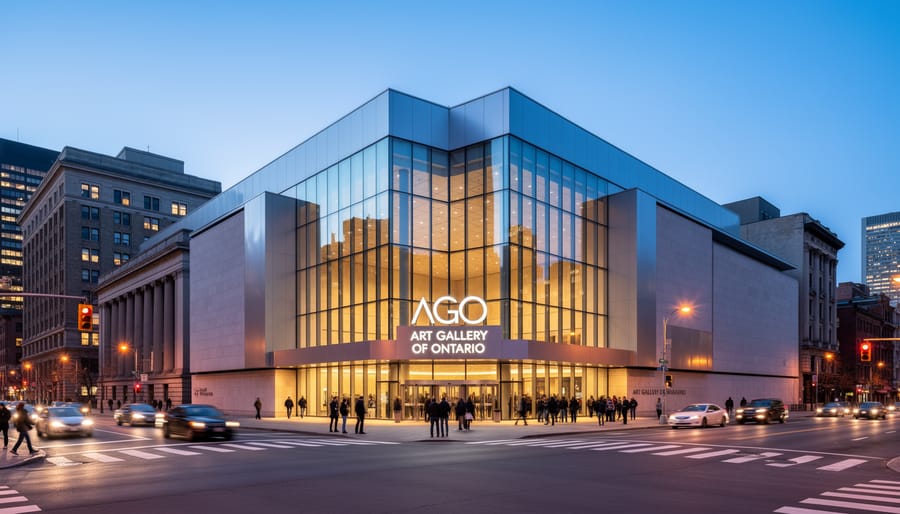
The Art Gallery of Ontario is currently mid-construction on its largest expansion in nearly two decades. The Dani Reiss Modern and Contemporary Gallery project will add 40,000 square feet of new exhibition space to the institution, representing a 30% increase in gallery space dedicated exclusively to modern and contemporary art. This substantial addition addresses the AGO’s long-standing challenge of displaying only a fraction of its 95,000-object collection at any given time, particularly works from the 20th and 21st centuries that have outgrown the museum’s existing footprint.
The project marks a strategic pivot for one of Ontario’s flagship cultural institutions. Rather than a general-purpose expansion, the AGO is investing in purpose-built galleries designed for the specific demands of contemporary art: higher ceilings for large-scale installations, flexible wall systems for diverse media, and climate-controlled environments that can accommodate video, digital, and time-based works. The fall 2027 opening will reshape how visitors experience the museum’s collection and position the AGO to compete with peer institutions globally that have similarly expanded their contemporary programming in recent years.
Key Developments Shaping the Project
1. Monumental Private and Public Funding Partnership
The $70 million funding package powering the Dani Reiss Modern and Contemporary Gallery represents one of the most substantial cultural infrastructure commitments in recent Ontario history. The project is anchored by a 35 million lead gift from Dani Reiss matched dollar-for-dollar by a $35 million capital investment from the Province of Ontario. This balanced public-private partnership signals a shared recognition that major museum expansions now require funding mechanisms that distribute risk and responsibility across multiple stakeholders.
Reiss, CEO of Canada Goose and a prominent figure in Canadian business and philanthropy, has chosen to direct his landmark gift toward expanding contemporary art infrastructure rather than traditional endowment or programming support. The naming of the gallery in his honor reflects both the scale of his contribution and the AGO’s strategic emphasis on securing transformative individual gifts that enable architectural ambition. For a single donor to commit $35 million to gallery construction positions this among the most significant private museum contributions in Canadian history.
The Province’s matching investment carries distinct implications. Government capital funding for museum expansion has become increasingly selective in 2026, with cultural projects competing against broader infrastructure priorities. Ontario’s decision to allocate $35 million to this expansion suggests provincial policymakers view the AGO as essential cultural infrastructure rather than discretionary amenity. The investment also positions the government as an active partner in shaping how contemporary art is accessed and experienced across Ontario, particularly as the AGO functions as a provincial institution beyond its Toronto location.
This dual-funding structure has become the de facto model for major museum projects. The days of primarily public or institutional self-funding for expansions of this scale have effectively ended. Museums must now demonstrate both philanthropic validation and public benefit to secure the combined resources needed to add 40,000 square feet of climate-controlled, architecturally distinguished gallery space in a major urban center.
2. Transforming the Modern and Contemporary Collection Experience
The additional 40,000 square feet addresses a longstanding challenge at the AGO: how to showcase a growing modern and contemporary collection when gallery space constrains what curators can display. Currently, significant portions of the museum’s holdings remain in storage, rotating through exhibitions on limited schedules. The expansion creates room to bring more works into continuous public view while simultaneously improving how visitors move through the galleries.
Architecturally, this scale of addition, a 30% increase in net gallery space, allows designers to rethink circulation patterns that have evolved incrementally over decades. Large contemporary installations demand ceiling heights and floor areas that historic gallery wings can’t accommodate. The new space will support monumental sculptures, immersive video works, and site-specific installations that require flexible, column-free environments. Natural light management becomes critical: contemporary art often demands precise control, unlike older galleries where daylight was integral to viewing paintings.
The dedicated rotating exhibition spaces solve another curatorial puzzle. Museums today compete for traveling shows and temporary installations that draw repeat visitors. Without purpose-built temporary galleries, institutions jury-rig permanent spaces, disrupting collection displays. The AGO’s expansion separates permanent and temporary programming, letting each function optimally without compromise.
From a planning perspective, adding 40,000 square feet to an existing institution requires thoughtful urban integration connecting new construction to historic wings while maintaining street presence and public access. The project also addresses accessibility standards that have evolved since earlier expansions, ensuring barrier-free movement throughout. Climate control systems must balance conservation requirements (stable temperature and humidity for artworks) with energy efficiency, a growing priority in museum construction.
For the collection itself, increased space means curators can present thematic narratives rather than chronological surveys, group works by material or concept, and allocate entire rooms to single artists when the work warrants it.
3. Positioning the AGO Within Ontario’s Museum Landscape
The AGO’s expansion arrives at a time when Ontario’s museum network is actively redefining how it serves audiences across the province. While Toronto anchors the region with major institutions like the AGO, the Royal Ontario Museum, and the Gardiner Museum, the province’s cultural landscape extends well beyond the capital. Regional galleries, from the National Gallery of Canada in Ottawa to the Art Gallery of Hamilton, the McMichael Canadian Collection in Kleinburg, and smaller institutions in Thunder Bay, London, and Kingston, have steadily expanded their contemporary programming over the past decade, responding to growing visitor interest in living artists and current practices.
This provincial context makes the AGO’s 40,000-square-foot investment particularly significant. As the largest art museum in Ontario, the AGO’s commitment to contemporary space signals broader shifts in collection priorities and audience engagement strategies that influence institutions province-wide. Regional galleries often look to the AGO for curatorial direction and exhibition models; an expansion focused exclusively on modern and contemporary art validates the genre’s importance and sets a precedent for how Ontario museums allocate resources.
The expansion also addresses a practical challenge shared across the sector: collection growth outpacing display capacity. Ontario museums collectively hold vast contemporary holdings that rotate through limited gallery space. By dedicating substantial new square footage to this material, the AGO responds not just to its own needs but to a province-wide conversation about visibility, access, and the role of contemporary art in public institutions.
Why This Expansion Matters for Ontario’s Cultural Architecture
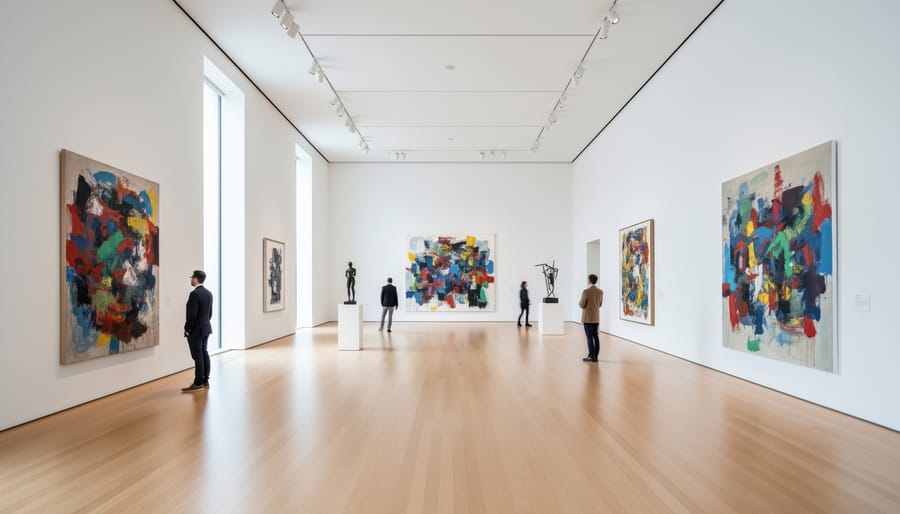
The AGO’s 40,000-square-foot expansion represents more than additional gallery space, it signals a fundamental shift in how Ontario institutions are approaching cultural infrastructure for the next generation. Museum expansions have historically acted as catalysts for urban transformation, and the Dani Reiss Modern and Contemporary Gallery will reshape Toronto’s cultural corridor while establishing new benchmarks for museum design across the province. This project arrives at a moment when cultural buildings are expected to perform multiple roles: they must serve as exhibition venues, architectural landmarks, economic drivers, and civic gathering spaces simultaneously.
From an architectural standpoint, expanding a contemporary art museum in 2026 requires balancing competing technical demands. Gallery design must accommodate large-scale installations and video art while maintaining the environmental controls essential for preserving fragile works on paper. Natural light, long prized in museum design, must now be managed through sophisticated glazing systems that filter UV radiation without sacrificing the psychological benefits of daylight. Climate control systems face pressure to reduce energy consumption while maintaining strict temperature and humidity parameters, particularly challenging in Ontario’s extreme seasonal swings that have shaped everything from Ontario’s medieval spires to contemporary institutional buildings.
Several core considerations are shaping modern museum construction standards:
- Carbon-neutral building systems and embodied carbon reduction in materials selection
- Flexible gallery configurations that can adapt to evolving exhibition formats and technology
- Universal accessibility extending beyond code compliance to inclusive spatial design
- Integrated digital infrastructure supporting augmented reality and interactive installations
- Urban connectivity that blurs boundaries between museum interior and public realm
The expansion also reflects global trends in museum development. Major institutions worldwide are dedicating increasing square footage to contemporary art, responding to audience demand and the spatial requirements of immersive, experiential works. Unlike traditional painting galleries that might accommodate dozens of works in a single room, contemporary installations often require entire gallery suites, pushing museums to expand or reimagine existing spaces.
Ontario’s broader cultural architecture, from the relationship between Ontario landscape and architecture to specialized design solutions like architecture for harsh terrain has consistently demonstrated that buildings responding to specific environmental and cultural contexts perform better than generic solutions. The AGO expansion must address Toronto’s urban density, heritage context, and climate realities while creating galleries that feel both monumental and intimate. This balance will influence how other Ontario museums approach future expansions and renovations.
What to Watch: Timeline and Next Milestones
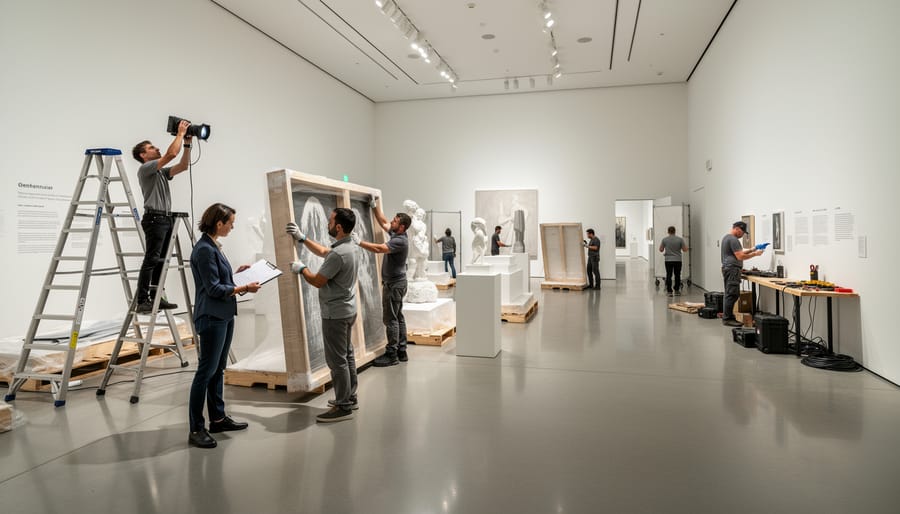
As the AGO’s expansion enters its active construction phase, several key milestones will define the project’s progression through 2026 and into 2027. Monitoring the construction timeline will offer insights into both the technical execution of adding 40,000 square feet of gallery space and the curatorial decisions shaping how the expanded institution will present its modern and contemporary collection.
Throughout the remainder of 2026, expect structural and envelope work to advance visibly, particularly as the new gallery spaces take form. The AGO will likely release periodic construction updates, but design-focused audiences should watch for the anticipated reveal of interior gallery configurations and architectural details. Museums typically unveil spatial design and lighting approaches in the months preceding opening, offering a preview of how natural light, ceiling heights, and circulation will shape the visitor experience in dedicated contemporary art spaces.
Programming announcements will emerge as 2027 approaches, detailing which works from the collection will anchor the inaugural installation and whether the AGO plans exhibitions or commissions to mark the opening. These curatorial decisions will signal how the institution intends to use the expanded capacity and whether new acquisitions or long-stored works will feature prominently.
For the global architecture and museum design community, this project represents an opportunity to observe contemporary gallery expansion in a major North American institution. The technical solutions for climate control, accessibility, and flexible exhibition infrastructure in the new spaces will offer case study material for museum professionals worldwide. As construction documentation and design details become public, they will provide benchmarks for similar cultural infrastructure projects across Ontario and beyond.
Frequently Asked Questions About the AGO Expansion
The AGO expansion raises natural questions for anyone following Ontario’s cultural landscape and museum development. Here are clear answers to the most common queries about the project.
When will the new gallery open?
The Dani Reiss Modern and Contemporary Gallery is scheduled to open in fall 2027. Construction is currently underway, with the project on track for completion by that target date.
How much larger will the AGO become?
The expansion will add 40,000 square feet of new gallery space, representing a 30% increase in the AGO’s net gallery area. This substantial growth focuses specifically on modern and contemporary art exhibition space.
Who funded the expansion?
The project is supported by a dual funding model: a $35 million lead gift from Dani Reiss, for whom the gallery is named, and a matching $35 million capital investment from the Province of Ontario. This public-private partnership totals $70 million in committed funding.
What type of art will be displayed in the new space?
The expansion is dedicated to modern and contemporary art, allowing the AGO to showcase more of its existing collection in these areas and create dedicated spaces for rotating exhibitions that reflect current artistic practice.
The scale and timeline of this project position it among the most significant museum expansions in Ontario’s recent cultural infrastructure development. While other regional galleries across the province have undertaken renovations and additions, the AGO’s 40,000-square-foot increase stands out for its singular focus on contemporary art presentation and the size of its public-private funding commitment. The fall 2027 opening will mark a pivotal moment for how modern and contemporary art is experienced in Canada’s largest city.
The Art Gallery of Ontario’s expansion represents a defining moment for cultural infrastructure in Canada. With a 30% increase in gallery space and $70 million in combined public and private funding, this project demonstrates the scale of investment required to meet contemporary museum demands. The dual commitment from Dani Reiss and the Province of Ontario establishes a funding model that balances philanthropic vision with government support, setting a precedent for major cultural projects across the province.
Beyond its immediate impact on how the AGO presents modern and contemporary art, this expansion signals broader shifts in museum design and programming. The additional 40,000 square feet addresses collection growth, visitor expectations, and the evolving role of art institutions in urban life. As construction progresses toward fall 2027, the project offers valuable insights into adaptive museum architecture, spatial innovation, and the integration of contemporary art spaces within historic institutions.
For architects, designers, and cultural observers, the Dani Reiss Modern and Contemporary Gallery will serve as a benchmark for museum expansion projects globally. The coming months will reveal design details, construction methodologies, and curatorial strategies that will shape how we think about exhibiting contemporary art in the decades ahead.

Related Posts
Architectural Details That Define a Classic Fireplace

Cash House Buyers Transform Britain’s Derelict Buildings Into Architectural Gems

Why Calgary’s Historic Buildings Need Specialized Architectural Painting
How Delta-8 Retail Spaces Are Redefining Cannabis Store Design

Tips for Designing a Vape-Friendly Building to Enhance Overall Comfort and Safety

Four Architecturally Significant Museums Designed by Renowned Studios
Architectural Marvels in Canadian Cities
10 Best Architectural Museums Worldwide, Reviewed
How Badlands Houses Transform Ontario’s Harshest Terrain Into Architectural Masterpieces
The Badlands of Ontario: Where Raw Landscape Meets Remarkable Architecture
How Kitchener Homeowners Are Reimagining Kitchen Design in 2024